Over 4 million tonnes of good to eat surplus food goes to waste in the UK food industry every year, meanwhile millions are facing food insecurity.
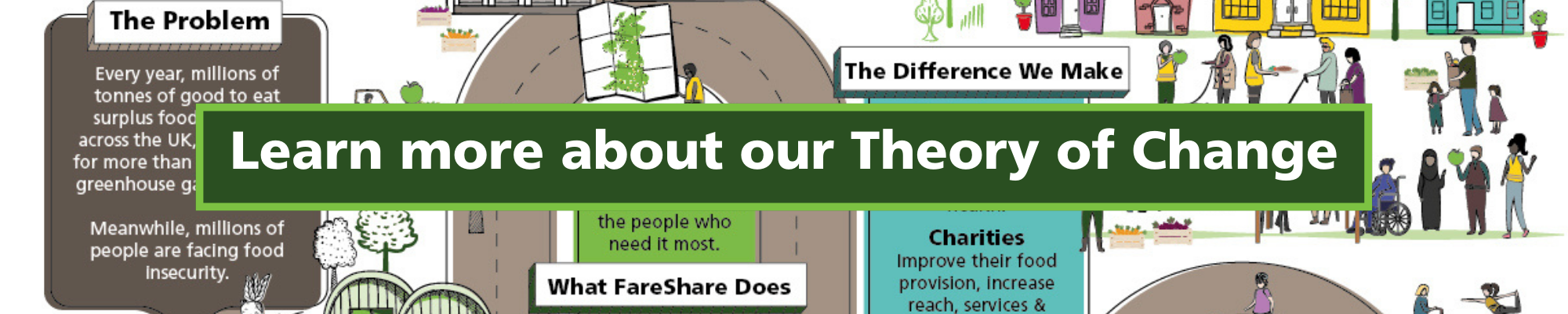
We strengthen communities by taking good food, that would otherwise go to waste, and getting it to local charities who use it to support people in their communities.

9 in 10 are able to provide more food
Over 2 in 3 reach more people
78% save an average of £150 per week
80% say surplus food reduces stigma

88% are able to try new foods
3 in 4 eat a healthier diet
83% feel closer to their community
82% feel less financial pressure
72% skip fewer meals
2 in 3 improve physical health
81% increase overall welbeing

In 2022-23, 91% of the food we provided was surplus that otherwise would have gone to waste.
For every tonne of surplus food FareShare redistributes, it prevents the waste of 2 tonnes of CO2e and 2.66 million litres of water.
The 2024 Impact Report uses FareShare’s latest survey and operational data to look at the difference we made in the year to 31 March 2024: from preventing embedded greenhouse gas emissions going to waste, to helping children develop better eating habits.
This evaluation by Rocket Science in partnership with the National Council of Voluntary Organisations (NCVO) looks at the impact FareShare’s work has on people who access food services. People report improvements in access to healthy food, wellbeing, reductions in stress and isolation, and less financial pressure.
The full report by Rocket Science & NCVO is also available.
This report by the Carbon Trust looks at FareShare’s carbon footprint and the emissions and water we prevent from waste in order to assess FareShare’s environmental impact in 2022/23.
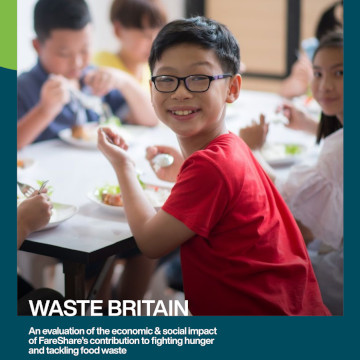
Our work creates a socio-economic impact of £225million a year, as demonstrated by the University of Hertfordshire. While there will always be surplus food, this report shows how tackling the UK’s staggering volumes of food waste can help the environment, individuals and communities, while providing savings to the State and our key public services.
The full technical report is also available.
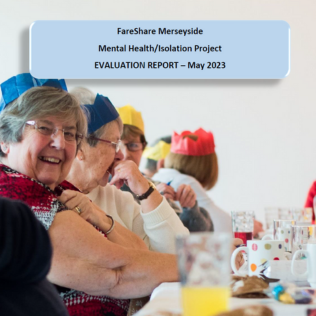
An evaluation of food supplied by FareShare, via frontline food provisions, on mental health and isolation in Liverpool. The report demonstrates how community based food provision promotes mental health and reduces isolation and promotes engagement.
FareShare’s 2022/23 Impact Report summarises key findings from our Annual Impact Survey and operational data to look at how the food we provided helped strengthen communities this year.
Charity & individual statistics are from FareShare’s 2022-23 Annual Impact Survey. Water and CO2e waste prevention figures are from the Carbon Trust’s 2023 Environmental Impact Assessment of FareShare, based on 2022-23 data from FareShare’s regional centres.