20 March 2025
“The work that we do here at the Grange Over Sands Community Foodshare involves a lot of different strands to it now, as we’re quite an established project. We’ve been here in the community for about five years. The main focus is that we work with FareShare to help the planet and stop all this perfectly good food being thrown into landfill; which is disgraceful. That’s the heart of what we’re doing, and it’s reflected in the ‘climate action’ mural on our wall.
“We have a strapline: “food, people, community”. You start by saving some food, it gets people together, you start eating together and then people start talking, which leads us onto discussing other issues in people’s lives. You start with a real leveler; often the food is just the tip of the iceberg, and then we just listen to each other. It’s a real grassroots community. The metaphor is it’s like a spiral. It started with a couple of us and it’s just got bigger and bigger. It now creates its own energy and just keeps getting more and more powerful, manifesting what the local community needs.
“I always say to people, this is a little island of graciousness and grace. We’re actually eating the food that would have been disposed of and as a rural community, it’s even more important for us to show respect to farmers all over the world. We get together to do that activity, find out about each other and start supporting each other; we create a community.
“The project started very much with my daughter and I. We had gone through a long period together where I was very ill. We were caught in that vicious circle of being too ill to fill out and pursue sickness benefits, which require you to be well enough to complete. As a result, our income often dwindling to tiny amounts. There was nothing at the time in the local community in terms of environmental work or support for people. When I got a bit better, we began to reach out to the community and went off and visited FareShare, which was a hugely inspiring experience.
“We volunteered at other organisations and met amazing volunteers and staff. There was a real commitment to recycling as well as lots of different ways of getting people together and sharing food. Given that I used to be a chef, and knowing the set-up at Granges, we decided that a community lunch would be a great way to start.”
“The first community lunch was really successful, with really good food. You get food together, you get people together, and the community side of it starts to really flourish; people are so powerful. When you genuinely ask them what you can do and listen, they know exactly what they need. It’s the same all over the world. There’s nothing they want more than their kids to be safe and happy, and to have a good education. They want a warm, safe and dry place to rest, and when they’re not working, they want to spend their time doing something interesting. They also don’t want to work all the time.
“That’s the problem around here; it’s not that we have big sprawling estates with huge social deprivation, like we do in some parts of South Lakeland. The community here is very, very caught up in the three C’s: caring, catering and cleaning. It’s badly paid work, zero hours contracts, no promotion, no holidays and no sick pay; kicked out in November, begged to come back in March. The broad section of the community are working their socks off within one of these 3 industries, but it’s difficult to get anywhere. There’s just never enough money to make ends meet and costs keep going up. Living rurally has a kind of £2,000 tax on it too, because if you have to go to the hospital in Liverpool, it’s a whole day and a £45 taxi ride back. There’s lots of extra costs of living rurally.
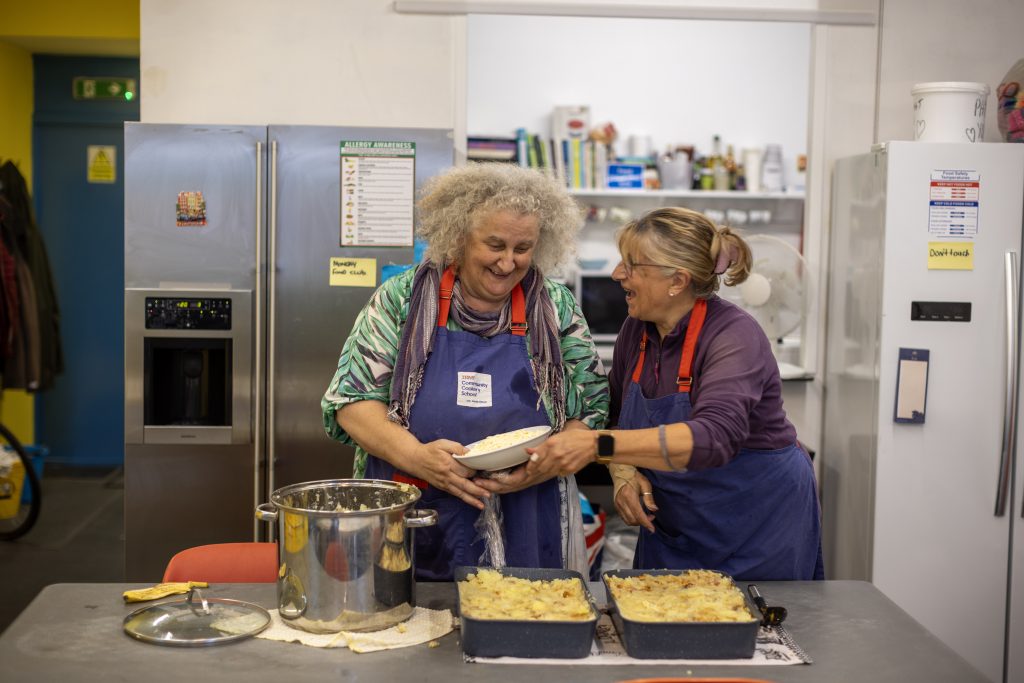
“Eating together is really important. Gathering, preparing and sharing a meal. It’s a really basic thing that people do all over the world; they share food. Then they start talking and you can listen. I often say to our volunteers who help with the lunch service; you go from food unloaders and unpackers, and cleaners, to hosts of the guests coming to Food Club. When you’re sitting down to dinner you almost have to take on the role of a “parent”, listening to what people are saying. For example, if someone said “I don’t always heat that room until November”, that’s something we can pick up on. We’re now having a local council representative come and visit us, so everyone who comes to Saturday food club, has the option to be taken through the “cool to cosy” procedure, as well as Pension Credit. There’s huge confusion about Pension Credit amongst the very people who should be getting it. It’s therefore an integral service to receiving support. It’s a delight that we’re getting back to that stage of eating together, to form this supportive network.
“Being a food club member definitely opens the door to all sorts of support and services. We’ll signpost wherever possible, but we’re very cautious when doing this. I personally, or a member of staff, will check out any service or support being offered, before we recommend it to local people to make sure our community are getting the best continued support possible.”
“When you come to Food Club, you’re saving between £50-£70 a week. Call it £2000 a year in your back pocket. You can fill the gaps in your menu locally, which supports the local community, and then you can do other things with your money.
“I’m never more delighted than when I see families taking time off and making the most of the summer holidays. I see the Facebook photos and they say that they’re doing it because they’re not spending all this money on food. Due to the rural nature of this community, coming to your local food club also cuts down on all the driving and the fuel costs.”
“The importance of saving food to protect the planet is throwing millions and millions of tons of food away creates greenhouse gases. Those emissions go up into the atmosphere and cause huge problems for the ozone layer; that beautiful bubble that we can’t see, that’s keeping us nice and cool. To put it into perspective, if food waste was a country, it would be the third biggest generator of greenhouse gas emissions, after China and North America. We’re talking perfectly good food; I think people sometimes think it’s rotting food. It’s not. It’s just the computer said, “no, bin it”. It’s really important that we tackle it for the whole planet, not just for our local community.
“Parts of Cumbria are coastal and as a rural community we see changes in land and in the rising tidal levels. The effects of climate change are coming to us here in the Northern Hemisphere; people who are living near the equator are having their entire islands disappearing. It’s a hugely important issue.”
“The food we receive from FareShare is a really integral part of the project. It’s grown out of us being in the community and recognising a real need for support. People were struggling, so we created a charity. Our mission is to tackle poverty, with a particular emphasis on supporting mental health, because the two quite often go hand in hand. People who have long term mental health issues, their ability to earn and be part of society has been severely reduced by being poorly. We address the two sides of that coin.
“The surplus food from FareShare is such a brilliant way of taking something that’s spare and turning it into treasure. We can offer these people food and then we can start to understand if there’s a mental health issue going on and address that by signposting them accordingly.
“One of the really big things about being unwell is becoming really isolated and thinking that there’s no one else like that; that is just not true. The charity side of what we do is a 6 weeks intensive connection and uncover all the other issues that are going on. After that we just ask for an ‘ask’ and we ask for a ‘thank you’. The ‘ask’ and the ‘thank you’ are bookends to the 6 weeks. We don’t ask for any proof, we don’t want to cause any stress. It’s getting over that shame and embarrassment; about thinking the situation you’ve found yourself in is your fault and there’s no one in a similar position. The food is such a good starting point; we’ve got this surplus food, let’s give you some. Then we can add into that a sack of washing powder, a free meal at the local chippy, and we try to get them to join in with the project in some way and keep in touch with us. It’s a massive, massive benefit for everyone involved. People power! It’s amazing.”