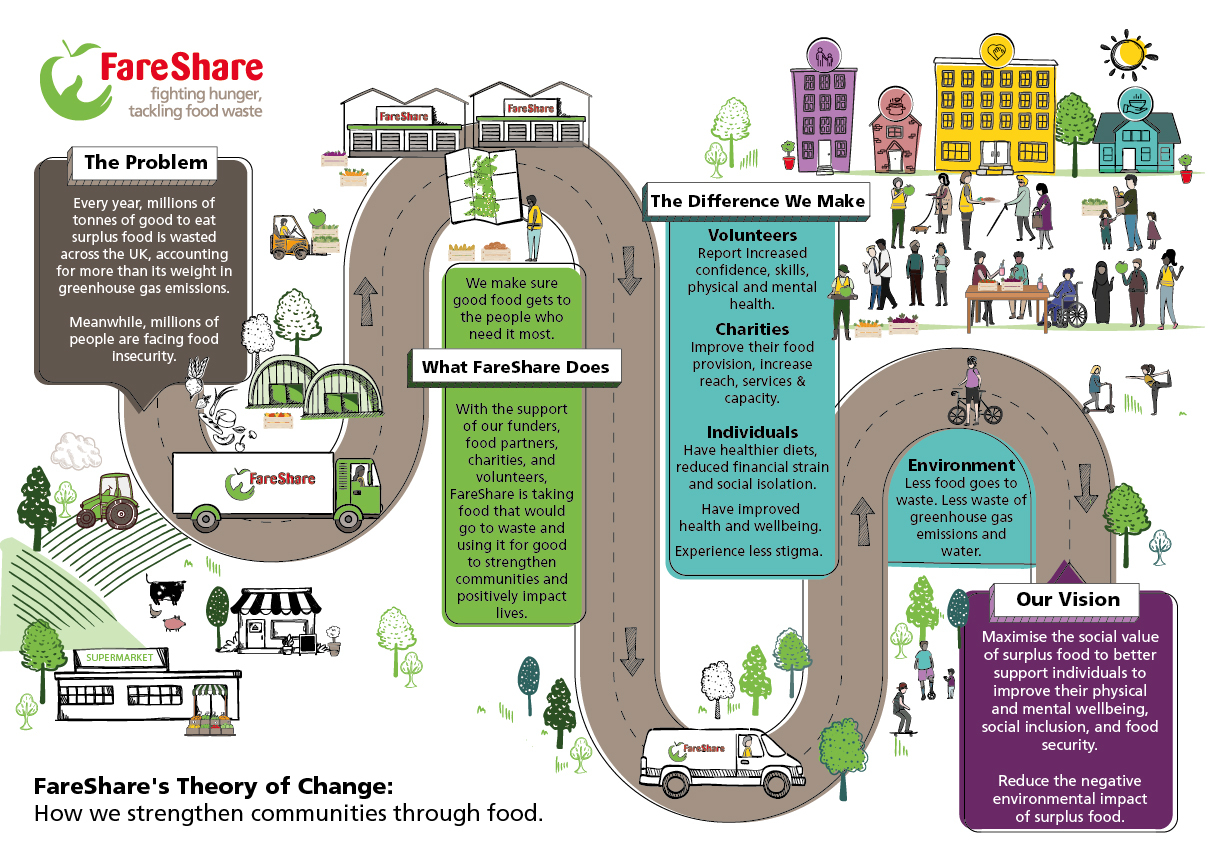
Every year, over millions of tonnes of good to eat food is wasted across the UK’s food industry, releasing greenhouse gas emissions, despite millions of people facing food insecurity.
FareShare turns this environmental problem of food waste into social good.
By working with the food industry and with the support of our national network of partners, funders and volunteers, we ensure the food goes to the people who
need it most.
We work across the UK with charities and community organisations that help tackle the root causes of poverty and provide wrap around services, from domestic
violence centres and homelessness shelters to hospices, community centres, pantries and after-school clubs.
We strengthen communities by distributing good to eat (surplus) food to charities and community organisations.
We enable those organisations to:
As a result, individuals accessing these services experience:
FareShare volunteers experience:
We help the environment by:
Maximise the social value of surplus food to better support individuals to improve their physical wellbeing, mental wellbeing, social inclusion and food security.
Reduce the negative environmental impact of surplus food
We aim to achieve these goals by prioritising organisations that: